Iron Mountains
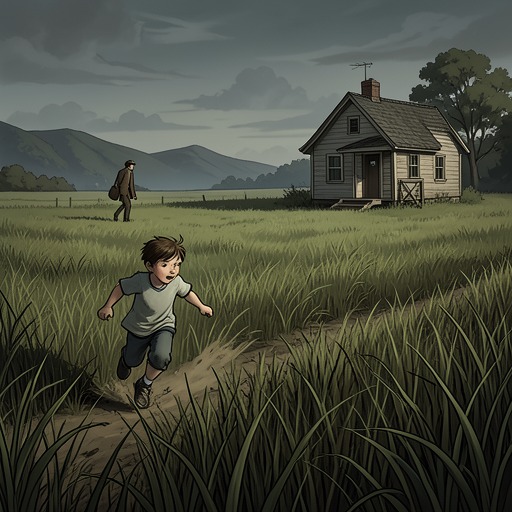
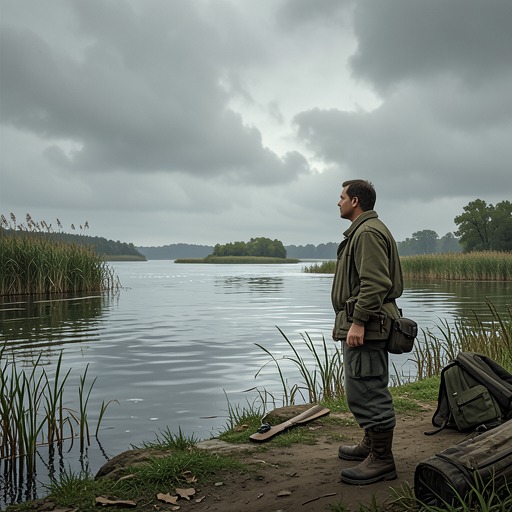
The Greatest Beer Run Ever: A Memoir of Friendship, Loyalty, and WarThe Iron Mountains are a landscape of thin, difficult soil and small, hedged fields, where the limits imposed by the ground helped preserve an unusually rich rural ecology. The hills also hold a history of hard-won settlement: scattered cottages and narrow lanes connect families whose thrift and mutual reliance grew out of life on land once considered too poor to support them.
Terrain and ecology
In places the soil is no more than an inch deep, resting on blue-grey clay or compacted gravel that cannot absorb heavy rain. Rushes and wiry grasses help keep the thin covering from washing away. Between the lakes, the fields are small and bounded by thick hedges of whitethorn, ash, blackthorn, alder, sally, rowan, wild cherry, green oak, and sycamore. The hawthorn fills with blossom in May and June; rowan berries glow orange in the light from the lakes each September. The hedges shelter mice, insects, small birds, and hunting sparrowhawks, while wild woodbine and dog rose scent the banks on summer evenings. Primrose, foxglove, wild strawberry, fern, vetch, orchid, and windflower grow among the briars and grasses.
The landscape’s wildlife follows the same boundaries. The otter’s well-used route between the lakes can be traced along banks and hedges, and quiet lakeside lawns, scattered with fish bones and blue crayfish shells, mark places where otters feed and raise their young. In contrast to the poor fields, patches of rich green limestone appear unexpectedly among the rushes. The soil’s poverty had an unintended consequence: while old hedges and great trees were being cleared elsewhere in Europe for factory farming, these fields remained largely intact. The narrator remembers them as scarcely changed since childhood.
Settlement and mountain history
The fields above Corleehan Church were poorer still. On the hill behind the family home, a trout stream ran through small pools among rock and bare gravel; boggy meadows below the house yielded potatoes, turnips, cabbage, and winter fodder. Thin seams of coal and iron had been mined there sporadically, but the slopes had once been thought too poor to sustain a settled population. The families who made lives there are described as resourceful, thrifty, and careful, qualities demanded by the conditions of the mountain. Even when relatives became comfortable, they remained averse to extravagance.
Many surnames in this part of the mountain were Northern, and many of the families were related. The account connects their settlement to an earlier history of displacement: generations before, some had been weavers in the North, where organized violence broke their looms and burned their homes as they competed with established Protestant weavers. They fled west and south before settling on these marginal slopes. The mountain’s community thus carries both the material imprint of poor land and a history of people forced to remake their lives elsewhere.
Lanes and homes
Floods often tore up the road climbing from Corleehan into the mountains. A narrow lane between low whitethorns led from it to the narrator’s grandmother’s house, its banks bright with primroses, vetch, blueberries, and wild strawberries. Elsewhere, a maze of lanes joins the sparsely scattered houses and winds between high banks; where the hedges meet overhead, summer light enters in vivid pinpoints through a roof of leaves. The narrator’s mother’s love of lanes is associated with this mountain path and its flowers.
At the lane’s end stood the three-room cottage, its thick walls whitewashed and its thatched roof renewed in sections by Jimmy, the narrator’s uncle, who thatched a seventh of it each year. Climbing roses framed the house; a small iron gate beneath an arch of trained whitethorns opened into a herb and flower garden. The thatched, whitewashed outbuildings included a byre, stable, fowl house, turf shed, and cart house. A row of white beehives stood at the bottom of the meadows, and heather honey sold in Dublin brought in useful extra income in good years. Because the family’s bog lay high on the mountain, Jimmy had to leave with the horse and cart at five in the morning to have a chance of bringing home two loads of turf in a day.
Inside, the cottage was exceptionally neat and spare. A table folded down from a rail beneath the deep window for meals and was put away afterwards; pots hung above the open hearth, and the room held a flour bin, an open dresser, chairs, stools, and buckets. Religious pictures and a shop calendar hung on the whitewashed walls, with a small red lamp burning beneath the Sacred Heart. The practical arrangement of the house, like the work of maintaining its roof and carrying turf home, makes visible how closely domestic life was shaped by the mountain’s constraints. Across its lanes, fields, and homes, the Iron Mountains emerge not as untouched wilderness but as a lived-in landscape whose poverty helped sustain both its local community and its enduring character.